
Parallel Project Management Training
Excellence in project management
Gain knowledge through study, develop skills via practice, grow in competence to deliver complex projects successfully.

We're with you all the way

Individual
Individuals looking to enhance career prospects with professional training.

Group
Group training to enhance team project management skills.

Corporate
Delivering APM courses and tailored training to meet your business needs.

About Parallel
Parallel Project Training delivers high-quality project management training to project managers at every stage in their career. Whether you have years of experience as a project management professional or are ready to take your first steps in the profession, we can provide you with expert training that will enhance your career.
Established over 15 years ago, Parallel has supported thousands of delegates at every stage in their careers and through all levels of project management qualification. Working closely with professional bodies like the Association for Project Management (APM), we have developed industry-leading training courses and provided delegates with professional skills that they can use throughout their careers.

Our values
Professional
Our expert trainers work to the highest standard and use their extensive first-hand experience of project management to support our customers during their ongoing professional development.
Trustworthy
You can trust us to look after your development. We prioritise your needs, and are committed to acting with integrity and transparency.
Well informed
As experts in project management, we are actively involved in shaping the future of the profession and upholding the highest standards
Approachable
We are open, communicative and flexible, adept at demystifying complex topics and making them accessible and easy to understand.
Specialists
As specialists in project management, we understand its diverse applications, across different sectors and apply a flexible approach to growing professional project management competence.
Caring
We are a relationship based business. We maintain long term relationships with customers who know we care and go the extra mile for each and every one of their learners.
Our courses
APM qualifications offer clear progression through the levels of project management experience and knowledge. You will learn foundational skills at the APM PFQ level, build on this experience and knowledge at the APM PMQ level and demonstrate a range of experience at APM PPQ. If you want to demonstrate the wealth of experience and knowledge that you have as a project professional, then you can work towards becoming a Chartered Project Professional (ChPP).

APM Project Fundamentals Qualification (PFQ)
This course will cover the fundamental elements of project management, giving those new to the profession a good grounding in project management.
APM Project Management Qualification (PMQ)
The PMQ course is for project managers wanting to establish their career and demonstrate their higher-level knowledge.
APM Project Professional Qualification (PPQ)
For those with practical experience as well as theoretical knowledge, the PPQ course is suitable for experienced project managers.
APM Chartered Project Professional (ChPP)
For those seeking to reach the pinnacle of their career, APM chartership is the opportunity to demonstrate your experience as a project professional.
Alongside our APM qualifications, Parallel also offers both accredited and non-accredited training options.
Our learning options
Parallel offer a range of learning options to support you through your project management training journey. If you have any questions, please contact us.

Virtual classroom
Effective training and support from one of our highly experienced and qualified trainers in a live virtual classroom that can be joined from anywhere in the world.
Distance learning
Study at your own pace and timescale with our APM project management distance learning packages. Pre-recorded sessions can be re-watched multiple times.
Corporate solutions
We have more than 15 years’ experience delivering off-the-shelf and bespoke training courses on client premises or in a virtual classroom.
Our upcoming courses
No events to show

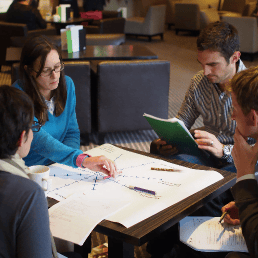
What are our courses like
The aim of Parallel’s training courses is to equip you for the qualification exam you are taking and to give you practical tools that you can apply to your project management career.
Project management professional development and training solutions from Parallel involve active participation in real-world tasks, collaborating with others using realistic case studies, watching webinars and listening to podcasts. In our online sessions we make use of breakout rooms to give delegates time to discuss topics amongst themselves and draw their own conclusions. We also encourage group discussions and use group exercises to solidify knowledge and understanding.
Companies we work with









Case studies
Google reviews
There are various project management qualifications available. At Parallel, we want to simplify the process and help you understand which training approach is right for you.
New project managers
As someone new to a project environment, you will want to build skills and learn how to apply project management practices in a professional environment. Whether you are already in a project management role or are seeking to move into the industry, our courses for new project managers can help you achieve these goals. Parallel’s project management training uses active learning techniques to develop the necessary skills, knowledge, behaviours and attitudes that underpin these essential capabilities.
Typical new skills learnt include:
- Applying project management life cycles
- Budgeting techniques for projects
- Creating a project management plan
- Managing risks
- Understanding the procurement process
Parallel’s approach to training project managers, both through bespoke courses and professional qualification courses, allows junior project management professionals to feel confident in their knowledge from the very beginning. We equip you with the skills to begin planning and delivering successful projects once you’ve completed a training course.
If you are new to a project environment, you might be interested in our APM Project Fundamentals Qualification (APM PFQ) or APM Project Management Qualification (APM PMQ) courses. If you aren’t sure which course is right for you, please contact us or find more details on our APM PFQ and APM PMQ pages.
Experienced project managers
If you have been working in the project management field for some time, you might be looking for a qualification to demonstrate your experience or enhance your knowledge. At Parallel, we can help you to obtain further qualifications and work towards professional goals such as APM chartership in order to become a Chartered Project Professional (APM ChPP).
Our training will help formalise topics, processes and procedures that may already be in use in your organisation. We will put them into a real-world context through the use of practical examples and meaningful case studies. As a project professional, you will learn new theory or better understand how to put the theory you already know into practice. Undertaking an advanced qualification will allow you to deliver projects more successfully and demonstrate your project management experience with an internationally recognised qualification.
Our project management training helps to develop and improve:
- Approaches to complex change
- Communication with stakeholders, customers and team members
- Conflict resolution
- Leadership skills
- Project planning
If you are an experienced project manager, you might be interested in our APM Project Management Qualification (APM PMQ), APM Project Professional Qualification (APM PPQ) or Chartered Project Professional (ChPP) courses. If you aren’t sure which course is right for you, please contact us or read more about our courses.
You might be seeking a project management training course to enhance your CV, learn new skills or validate your professional experience. Whatever your goals, the Parallel team are here to help you reach them.
Professionals across the globe have discovered that project management training can increase their success as professional project managers. Project managers are required to be effective at planning, executing and monitoring their projects. In order to decrease the risk of deadline failures and to make managing projects easier, individuals should contemplate undertaking professional training and qualifications to enable them to embed their skills and enhance overall project performance.
Because companies invest immense resources into projects, project managers need the necessary skills to improve the success rate of all projects. Undertaking the right course of study will prepare you for various challenges that may arise and support you as a project manager in consistently delivering successful projects.
Benefits for organisations
Our research on the benefits of project management training shows that almost 90% of project managers who attended our bespoke training believe their organisation has benefited from the new knowledge and skills they learned. The organisational benefits of undertaking tailored project management training with Parallel are:
1. Consistent project delivery
When project managers understand how to manage projects effectively, they can apply their learning to introduce a consistent approach to project management within their organisation. This ensures that projects are delivered in a structured way every time.
2. Increased efficiency
A project management professional can better determine the requirements of a project and make best use of the available resources, limiting the waste of time, money and effort. This means that an organisation is able to take on a higher level of risk and reap a higher level of reward due to efficient project management processes.
3. Higher levels of customer satisfaction
When projects are delivered consistently and reliably, customers receive what they expect, when they expect it, within budget, resulting in satisfied customers. This will improve your organisation’s reputation and demonstrate your improved project management capability.
4. Effective risk management
The ability to identify potential risks and manage those risks in the most efficient way improves a project manager’s ability to lead projects to a successful outcome. At an organisational level, this means demonstrating knowledge of risks and capability for dealing with them. This will provide assurance to your clients that you know how to handle complex projects and complete them successfully, even if challenges arise.
5. Effective leadership
Our bespoke project management training will provide insight into different theoretical models and practical approaches to leadership, encouraging project managers to become more confident and independent leaders. Good leadership will improve project team cohesion, further enhancing your organisational capability to deliver projects effectively and efficiently.
Benefits for individuals
The Parallel project management training approach provides individuals with the confidence to take on project management roles and successfully carry out project processes. It also provides:
1. Skill augmentation
The foremost benefit of a professional qualification is skill augmentation. It helps those managing projects learn how to effectively schedule projects, create budgets and hone communication skills. These skills have a direct impact on the project manager, their organisation and the relationship with clients and stakeholders. APM qualifications are also suitable for PRINCE2 certification holders who require knowledge of other project management tools and techniques to acquire a comprehensive project management skillset.
Talented project managers will be able to sharpen existing skills and learn new ones. These will have a positive impact on their ability to motivate team members and communicate with all levels of the company. Individuals who gain project management qualifications will develop skills in:
- Active risk management
- Budgeting
- Project planning, implementation and monitoring
- Team leadership
2. Increased chances of career growth
Relevant project management training will enhance a project manager’s CV and demonstrate an ongoing commitment to their career development. A professional qualification shows employers that you are a capable project manager with valuable knowledge of both theory and practice within the field. The ability to demonstrate this knowledge and commitment will stand you in good stead for growing your career within your organisation and within the field of project management as a whole.
3. Promoting a common language
Training reinforces the project manager’s understanding and utilisation of a common project management language. It enables the project manager to better communicate with their project team and about the project in a clear and universally comprehensible way. Bringing a unified project management structure to an organisation provides consistency and reflects a good project management methodology.
Bespoke project management training
The business landscape in the UK is competitive and success is often measured by the ability of an organisation to navigate change, deliver innovation and execute complex projects in an efficient manner. Whilst professional project management qualifications offer an invaluable baseline, an increasing number of UK businesses are looking for bespoke in-house training to solve the specific challenges they face whilst driving tangible, measurable impact.
Bespoke training is not simply about developing skills, but also about business transformation.
Parallel Project Training is a strategic partner for tailored training solutions. Bespoke training courses are not simply about teaching generic principles. They are about understanding the unique culture of each organisation, and its challenges, to create a learning solution unique to the company. Let’s examine why a tailored approach can have such a profound impact, deliver a significant return on investment, and foster a consistent culture.
Bespoke training creates a more efficient, cohesive and adaptable workforce.
Developing a career in project management
If you are interested in the project profession and keen to pursue a career in project management, almost anyone can become a project manager with the right training and experience. It is a very rewarding career that you can do in multiple industries within the UK or all around the world. You might choose to gain experience in a range of industries or specialise in a particular area. Your career could follow a path in a strategic and commercial environment in, for instance, energy, construction or infrastructure. Or you would work in the charity, heritage or culture sectors.
Qualifications
Project management terminology
As a project leader, you will come across many terms and phrases to describe critical aspects of project management and the process of managing small-to-large-scale projects. Some are industry-specific while others address issues and activities within the project management cycle. We take a look at some of the most commonly used project management terminology and, more importantly, what they mean.
Here are some words and phrases that need to be in your vocabulary…